Most of us get into Mesh for alternative or backup communications. While mesh can be a powerful tool, it has limitations. To have a resilient communications plan, you have to look at mutable radio services. Mesh-Tastic should be one of many different options to fill out your P.A.C.E. plan.
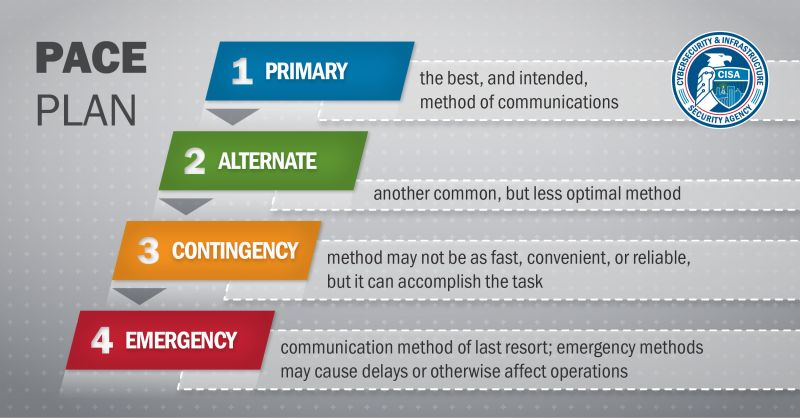
PACE Plan
A PACE plan is a structured, four-tier risk management strategy designed to ensure operational continuity, primarily for communications, by pre-determining backup methods. It establishes a, b, c, d hierarchy—moving from the best option to the last resort—to maintain functionality during system failures.
Primary: The main, most preferred, and efficient method of communication (e.g., primary radio channel, primary internet provider).
Alternate: The secondary method, used if the primary fails (e.g., satellite phone, a different network).
Contingency: The third option, utilized when both primary and alternate are unavailable (e.g., email, text, or another radio frequency).
Emergency: The last-resort, often slow but reliable method to ensure critical information passes (e.g., runner, signal flare, or emergency beacon).
License Free Radio Services
MURS (Multi-Use Radio Service)
FCC formally defines MURS as “a private, two-way, short-distance voice or data communications service for personal or business activities of the general public.”
MURS radios are license-free 2-watt VHF devices (151–154 MHz) ideal for short-distance,personal, or business communication in rural or outdoor settings. They offer 5 channels, better range in wooded areas than FRS/GMRS, and allow detachable antennas, often providing 2–10+ miles of range.
MURS 1 – 151.820 MHz
MURS 2 – 151.880 MHz
MURS 3 – 151.940 MHz
MURS 4 – 154.570 MHz
MURS 5 – 154.600 MHz
FRS (Family Radio Service)
FRS (Family Radio Service) radios are license-free, short-range, two-way walkie-talkies for family and group activities, using UHF frequencies (462/467 MHz) for simple communication. FRS operates on 22 UHF channels, known for their ease of use and affordability, though actual range is limited by terrain and power, with common features like privacy codes (not encryption) and best for line-of-sight, typically 1-2 miles, despite advertised longer ranges.
Channels 1-7 (Shared with GMRS):
Ch 1: 462.5625 MHz (Up to 2W FRS)
Ch 2: 462.5875 MHz (Up to 2W FRS)
Ch 3: 462.6125 MHz (Up to 2W FRS)
Ch 4: 462.6375 MHz (Up to 2W FRS)
Ch 5: 462.6625 MHz (Up to 2W FRS)
Ch 6: 462.6875 MHz (Up to 2W FRS)
Ch 7: 462.7125 MHz (Up to 2W FRS)
Channels 8-14 (FRS Only):
Ch 8: 467.5625 MHz (Up to 0.5W FRS)
Ch 9: 467.5875 MHz (Up to 0.5W FRS)
Ch 10: 467.6125 MHz (Up to 0.5W FRS)
Ch 11: 467.6375 MHz (Up to 0.5W FRS)
Ch 12: 467.6625 MHz (Up to 0.5W FRS)
Ch 13: 467.6875 MHz (Up to 0.5W FRS)
Ch 14: 467.7125 MHz (Up to 0.5W FRS)
Channels 15-22 (Shared with GMRS):
Ch 15: 462.5500 MHz (Up to 2W FRS)
Ch 16: 462.5750 MHz (Up to 2W FRS)
Ch 17: 462.6000 MHz (Up to 2W FRS)
Ch 18: 462.6250 MHz (Up to 2W FRS)
Ch 19: 462.650 MHz (Up to 2W FRS)
GMRS Licensed radio: $35 License fee for entire family – NO TEST
GMRS, short for General Mobile Radio Service, is a mobile UHF 2-way radio service in the U.S. that requires users to obtain a license. This frequency chart also applies to FRS, or Family Radio Service, as GMRS and FRS use the same frequencies and thus, can communicate with each other.
The FCC allows GMRS radios to have more power than CB and FRS radios, up to 50W versus the 4 watts allotted to CBs. The GMRS spectrum is broken up into 22 channels, which are shared with FRS, with 8 additional repeater channels (15R-22R) that are exclusive to GMRS and may only be used by licensed GMRS operators. GMRS frequencies range from 462.5625 to 467.7250.
| Channel | Frequency (MHz) | Radio Service | Max Power – FRS | Max Power – GMRS |
|---|---|---|---|---|
| 1 | 462.5625 | GMRS or FRS | 2 watts | 5 watts |
| 2 | 462.5875 | GMRS or FRS | 2 watts | 5 watts |
| 3 | 462.6125 | GMRS or FRS | 2 watts | 5 watts |
| 4 | 462.6375 | GMRS or FRS | 2 watts | 5 watts |
| 5 | 462.6625 | GMRS or FRS | 2 watts | 5 watts |
| 6 | 462.6875 | GMRS or FRS | 2 watts | 5 watts |
| 7 | 462.7125 | GMRS or FRS | 2 watts | 5 watts |
| 8 | 467.5625 | GMRS or FRS | 0.5 watts | 0.5 watts |
| 9 | 467.5875 | GMRS or FRS | 0.5 watts | 0.5 watts |
| 10 | 467.6125 | GMRS or FRS | 0.5 watts | 0.5 watts |
| 11 | 467.6375 | GMRS or FRS | 0.5 watts | 0.5 watts |
| 12 | 467.6625 | GMRS or FRS | 0.5 watts | 0.5 watts |
| 13 | 467.6875 | GMRS or FRS | 0.5 watts | 0.5 watts |
| 14 | 467.7125 | GMRS or FRS | 0.5 watts | 0.5 watts |
| 15 | 462.5500 | GMRS or FRS | 2 watts | 50 watts |
| 16 | 462.5750 | GMRS or FRS | 2 watts | 50 watts |
| 17 | 462.6000 | GMRS or FRS | 2 watts | 50 watts |
| 18 | 462.6250 | GMRS or FRS | 2 watts | 50 watts |
| 19 | 462.6500 | GMRS or FRS | 2 watts | 50 watts |
| 20 | 462.6750 | GMRS or FRS | 2 watts | 50 watts |
| 21 | 462.7000 | GMRS or FRS | 2 watts | 50 watts |
| 22 | 462.7250 | GMRS or FRS | 2 watts | 50 watts |
| 15RP | 467.5500 | GMRS | Prohibited | 50 watts |
| 16RP | 467.5750 | GMRS | Prohibited | 50 watts |
| 17RP | 467.6000 | GMRS | Prohibited | 50 watts |
| 18RP | 467.6250 | GMRS | Prohibited | 50 watts |
| 19RP | 467.6500 | GMRS | Prohibited | 50 watts |
| 20RP | 467.6750 | GMRS | Prohibited | 50 watts |
| 21RP | 467.7000 | GMRS | Prohibited | 50 watts |
| 22RP | 467.7250 | GMRS | Prohibited | 50 watts |
There are multiple GMRS repeaters in the area with the Fayetteville & Winslow having some of the largest coverage:
Fayetteville 700 – https://mygmrs.com/repeater/11474
Winslow 675 – https://mygmrs.com/repeater/7131
Lincoln 725 – https://mygmrs.com/repeater/10591
West Fork 600 – https://arkradio.net/repeaters-2/west-fork-600/
Tontitown 650 – https://www.repeaterbook.com/gmrs/details.php?state_id=05&ID=324
Bentonville 625 – https://arkradio.net/repeaters-2/bentonville625/
How to get your GMRS License: https://www.youtube.com/watch?v=xOuOIB1KCQ4
Amateur Radio: Requires Testing and License
Amateur (ham) radio is a popular, non-commercial service and hobby for experimenting with communications technology, allowing operators to chat globally or locally using voice, Morse code, and digital modes without internet or cell phones. It serves as a vital emergency communications tool, requiring an FCC license based on passing exams for one of three classes—Technician, General, or Amateur Extra.
Key Aspects of Amateur Radio
Purpose: The service provides a platform for self-training, intercommunication, and technical investigations. It is often used for emergency preparedness when conventional networks fail.
Licensing & Cost: In the U.S., you must pass a 35-question exam for the entry-level Technician license. The exam fee is generally low (often $15 or less for exam sessions), though additional fees may apply.
Equipment: Options include handheld transceivers ($100–$300), mobile units, and advanced base stations for long-distance (HF) communication.
Benefits: It connects people globally, fosters technical skills in STEM, and allows participation in emergency communication services.
License Classes:
– Technician: Entry-level, focuses on local VHF/UHF communication.
– General: Grants privileges on all amateur bands, including long-distance HF.
– Amateur Extra: Highest class, providing all available, authorized, amateur radio frequencies.
BVRC: Bella Vista Radio Club
BVRC is the largest radio club in Arkansas and serves NWA
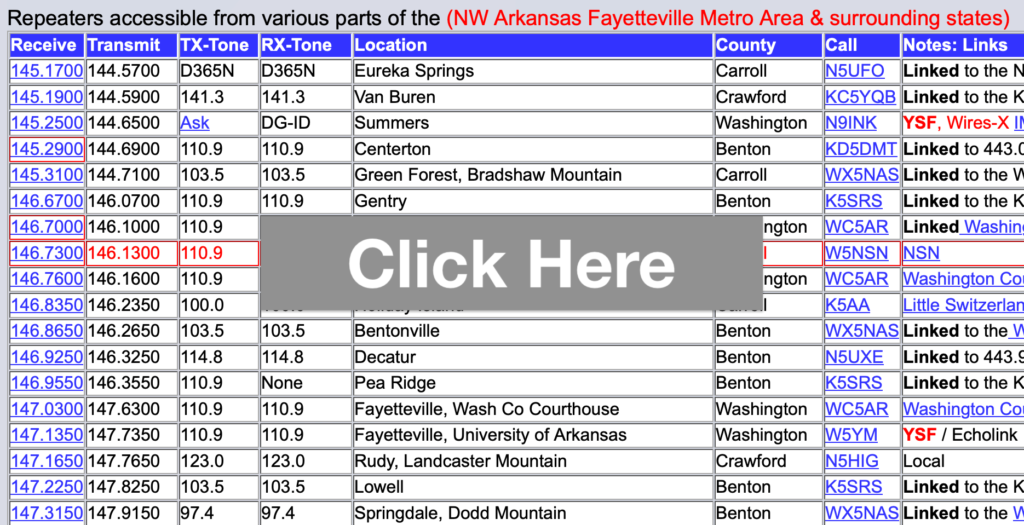
Repeaters in our Area (HAM, GMRS, & other information):
Radio Recommendations
You can get most of these in GMRS-only versions, but I prefer to future-proof and stick to dual-band UHF & VHF radios. Then you have the option for GMRS, MURS, & HAM (UHF/VHF).
Economy
There are many options, but for the value category I stick to BTECH / BaofengTech. You can get them directly from Amazon in a couple of days, and (only happened to me once) warranty service is easy. Also, in a world that seems like every company is making it a point to out-woke the next and attack traditional Christian values, I really appreciate a company that proudly embraces them. “While we specialize in communications, we believe in the transformative power of a personal relationship with Jesus Christ. Our focus is not just on connecting people with radios but also on fostering an even more meaningful connection with a higher purpose. Our company’s desire is to share the good news that was freely given to everyone.” https://baofengtech.com/about-us/
BaoFeng UV5R Mini ($25)
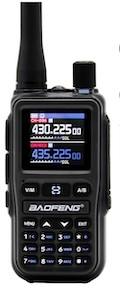
This is an awesome HT. It’s smaller than the original UV5R, has more power, bigger battery, CHIRP & BT programable, and type C charging (as everything should be). The stock antenna isn’t too bad either, especially for its size.
BTECH UV-25X4 (Second Gen.) Mini Mobile ($135)
25 Watt Tri Band Base, Mobile Radio: VHF, 1.255M, UHF – This is one of the best cheap mobiles. The second gen adds the 220 band. This is easy to install almost anywhere. It is really tiny, but works well. You can do just about anything you would need with 25 watts.
BTECH UV-50X2 (Second Gen.) ($220)
Mobile 50 Watt Dual Band Base, Mobile Radio: VHF, UHF. – If you have to have 50 watts for max power, this is an option. I have used 50 watt radios and almost exclusively used them on medium power (~25W) unless I needed a little extra to reach someone in the distance.
Best all around HT/Mobile Combo UHF/VHF Recommendations
Both of these will do GMRS, MURS, and both HAM bands (2M & 70c). They make a GMRS-only version, but I would get the dual-bander to have a radio that can be used on more bands in the future. This is the Goldilocks, they are feature-packed and can do things that $700 radios can’t. With an Android phone or tablet, you can exchange messages, locations, morse code, and have all your messages recorded. It also has a simplex repeater function that will parrots back everything for a makeshift repeater. I use the mobile in my shop to monitor repeaters. I can also call back to it (since its recording) so I can do my own range testing. If I were outfitting a team or family with a radio system, this would be it.
BTECH UV-PRO Dual Band HT ($165)
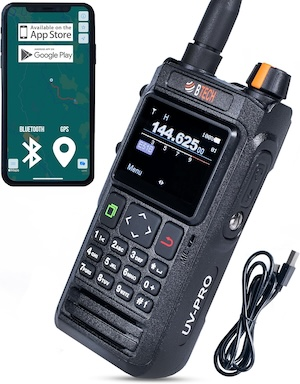
IP67 (water proof)VHF/UHF Two-Way Radio – APRS, Bluetooth, GPS, Text Messaging, Aviation Band Scanner, NOAA Weather Alerts, USB-C Rechargeable Battery
BTECH UV-50PRO 50W Dual Band Mobile ($329)
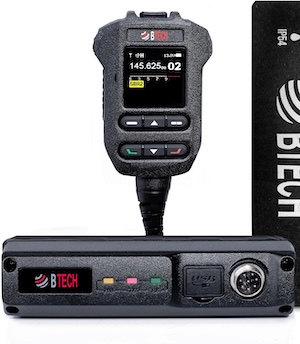
IP54 (water splash resistant) VHF/UHF Amateur Transceiver with APRS, GPS, Text Messaging, Bluetooth App Programming, & Satellite Tracking.